
There is a distinct moment in modern automotive history when utility stopped being boring. For decades, the recipe for a family-focused crossover was predictable: boxy proportions, uninspiring driving dynamics, and a prioritize-function-at-all-costs philosophy. Then, Chevrolet decided to break the mold.
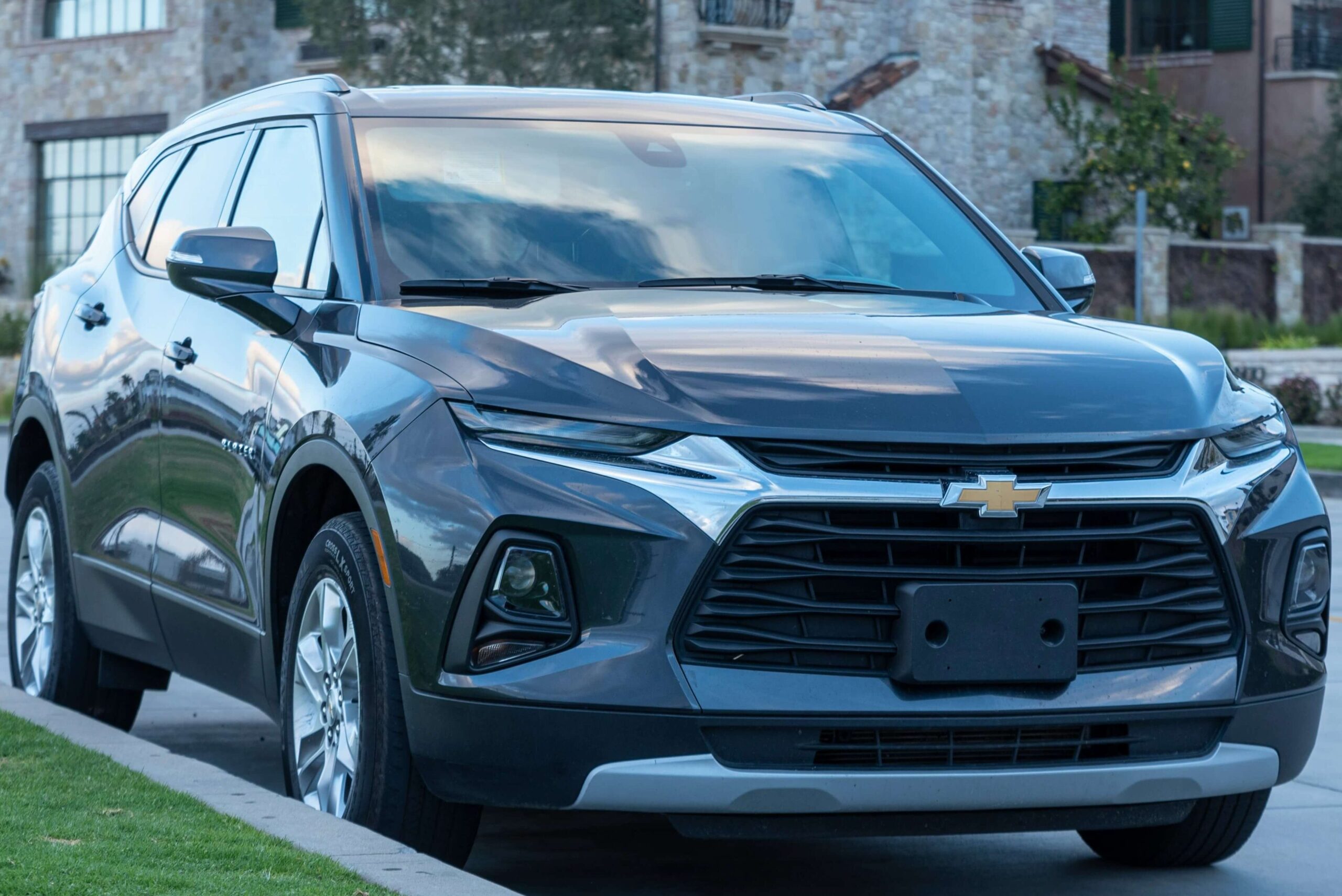
By pulling inspiration not from the commercial truck lineup, but from the DNA of America’s quintessential pony car—the Camaro—the modern Chevrolet Blazer completely redefined what a midsize crossover could look like. Sitting comfortably in the sweet spot between the compact Equinox and the three-row family-hauling Traverse, the Blazer stands out in a crowded United States market as a vehicle designed for those who need space but want style.
Let’s dive deep into what makes the Chevrolet Blazer a compelling powerhouse in the American market, examining its design, engineering performance, everyday utility, and safety features.
The “Camaro SUV” Aesthetic
You can’t talk about the Blazer without talking about the way it looks. Most crossovers look like appliances; the Blazer looks like it wants to pick a fight.
Up front, the face is entirely dominated by a massive, gaping grille and these impossibly angry, razor-thin LED running lights. The real headlights are actually hidden lower down on the bumper, giving it that low-slung, sinister squint that makes people move out of your way in the fast lane on the interstate.
Inside, the sports car vibes continue. Instead of the usual generic plastic dash you find in this segment, you get massive, circular air vents right in the center console. To change the temperature, you literally twist the outer rings of the vents—a clever mechanical detail borrowed straight out of the Camaro. It’s tactile, it’s fun, and it breaks up the monotony of modern screens.
Under the Hood: Two Very Different Personalities
Chevy doesn’t force a one-size-fits-all engine strategy here. Depending on which trim you pick, you get two distinct driving dynamics.
  2.0L Turbo 4-Cylinder                    3.6L V6 Engine
  [ Snappy / City-Friendly ]              [ Old-School Muscle / Linear ]
  - 228 Horsepower                         - 308 Horsepower
  - Great daily commuter                - Fun on freeway on-ramps
  - Fuel efficient (29 MPG Hwy)      - Tows up to 4,500 lbs
The standard 2.0-liter turbocharged four-cylinder is the sensible choice. Producing 228 horsepower, it’s got plenty of low-end punch for zipping through city traffic. It doesn’t make a ton of noise, it gets the job done, and it saves you money at the pump (hitting up to 29 MPG on the highway).
But if you actually care about the act of driving, you want the 3.6-liter V6. Pumping out 308 horsepower, this naturally aspirated engine feels increasingly rare in a world dominated by small, buzzing turbos. It delivers power smoothly all the way up the RPM gauge, sounds surprisingly throat-y when you step on it, and gives you the muscle needed to merge onto short highway on-ramps without breaking a sweat.
Picking Your Poison: Trim Breakdown
Choosing a Blazer boils down to how much attitude you want to display to your neighbors.
- The 2LT and 3LT models are the daily bread-and-butter. They give you all the space, a massive 10.2-inch touchscreen that works seamlessly with wireless Apple CarPlay and Android Auto, and standard safety tech without forcing you to pay premium prices.
- The RS is the one you actually want. This is the street-performance version. Chevy strips away all the shiny chrome and replaces it with high-gloss black accents, sinister black Bowtie badges, and massive 20-inch wheels. Inside, the cabin gets blasted with red contrast stitching and ambient lighting. It looks mean, especially in darker paint colors.
- The Premier is for drivers who want the luxury experience without paying the premium insurance rates of a European luxury brand. It swaps the RS’s aggression for classic chrome trim and a softer, more elegant interior palette.
Out on the Tarmac: Real-World Capability
A lot of midsize SUVs feel top-heavy, leaning uncomfortably whenever you take a highway exit ramp a little too fast. The Blazer doesn’t do that. It tracks surprisingly flat through corners, with steering that feels heavier and more connected to the road than its rivals.
If you live in the Rust Belt or the Pacific Northwest where winters get nasty, the Twin-Clutch AWD system on the RS trim is a game-changer. It doesn’t just wait for the car to slip and then send power to the back; it actively shuffles power between the left and right rear wheels to help push you through corners on dry pavement, and digs you out of deep slush when the weather turns foul.
And a quick turn of the Driver Mode Selector dial on the center console lets you change how the car behaves instantly, adjusting things for maximum fuel economy, slick snow, or sportier throttle response.
The Reality Check: Space and Utility
Because Chevy prioritized a sleek, sloping roofline, the Blazer does make a slight compromise compared to some of its boxier, more utilitarian competitors. If your sole goal in life is to maximize every square millimeter of cargo space, a boxy minivan-adjacent crossover might beat it on paper.
But in the real world? The Blazer is plenty big.
The Space Reality: Back-seat passengers get massive amounts of legroom, and the rear seats actually slide forward and back on tracks. Leave them up, and you’ve got 30.5 cubic feet of trunk space—plenty for a massive Costco run or a family’s vacation luggage. Fold those rear seats flat, and it opens up to 64.2 cubic feet. You can easily haul flat-pack furniture or camping gear without a problem.
Plus, if you opt for that V6 engine and the factory towing package, it can pull 4,500 pounds. That’s more than enough capability to haul a pair of jet skis, a small boat, or a pop-up camper for a weekend out in the woods.
The Chevy Blazer isn’t trying to be an off-road rock crawler, nor is it trying to be a boring three-row mall-wagon. It knows exactly what it is: a stylish, aggressive, five-passenger street machine built for people who need the utility of an SUV but still want to feel something when they step on the gas.
If you’re tired of driving a car that blends into the background of every parking lot in America, the Blazer is a loud, proud alternative that proves family transport doesn’t have to be a penalty box.