
An Automotive Expert Comparison & Value Analysis for Indian Buyers
For nearly two decades, the Maruti Suzuki Swift has remained an unshakeable pillar of the Indian automotive landscape. It is a vehicle that transcends demographics, appealing equally to first-time car buyers, daily office commuters, and small nuclear families. With the launch of the fourth-generation Swift, Maruti Suzuki has thoroughly modernized this iconic hatchback by introducing a brand-new Z-Series engine, a refreshed design language, and an elevated focus on safety, including six airbags as standard across all variants.
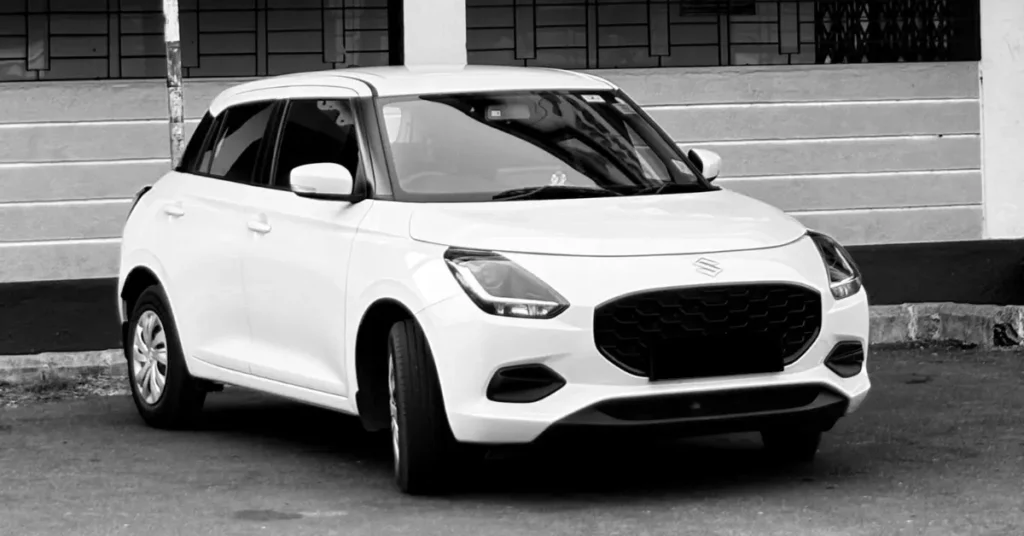
However, for the quintessential middle-class Indian buyer, the real challenge begins on the showroom floor: choosing the right variant. In typical Maruti fashion, the entry-level LXi and the one-above-base VXi sit right at the heart of budget considerations. While the LXi aims to offer an accessible entry point into the Swift brand, the VXi positions itself as the practical, feature-balanced choice. This comprehensive analysis evaluates whether the premium commanded by the VXi is justified or if the budget-conscious buyer is better off saving their hard-earned money and dressing up the base LXi variant through aftermarket modifications.
The Price Difference: Upfront vs. Long-term Impact
Price is arguably the most critical metric for Indian car buyers. The ex-showroom price gap between the Swift LXi and VXi stands at a premium of approximately ₹80,000 to ₹85,000. When calculating the final on-road price—which includes state road tax, registration, comprehensive insurance, and mandatory logistics charges—this premium inflates to around ₹95,000 to ₹1,05,000, depending entirely on the state of registration.
| Variant | Estimated Ex-Showroom Price | Estimated On-Road Price (approx.) | Transmission Options |
| Swift LXi (Base) | ₹ 6,49,000 | ₹ 7,45,000 | 5-Speed Manual (MT) Only |
| Swift VXi (Mid) | ₹ 7,29,000 | ₹ 8,40,000 | 5-Speed Manual (MT) / 5-Speed AMT |
For a buyer opting to finance their vehicle through a standard 7-year auto loan at an average interest rate of 8.75%, this one-lakh rupee difference translates to an additional monthly EMI burden of roughly ₹1,500 to ₹1,700. Alternatively, for a cash buyer, this amount represents a substantial buffer that could easily cover fuel expenses for the first entire year of ownership or fund an extended warranty alongside a premium insurance add-on package. Therefore, the VXi variant must present concrete, functional value to justify this stretch in budget.
Powertrain & Mechanical Specifications
Before diving into features, it is reassuring to note that Maruti Suzuki does not discriminate mechanically between these two variants. Both the LXi and VXi are powered by the new 1.2-litre, 3-cylinder Z12E naturally aspirated petrol engine. This engine replaces the older 4-cylinder K-Series motor, pivoting focus heavily toward exceptional low-end torque delivery and unprecedented fuel efficiency—two attributes that resonate deeply with Indian city commuters.
| Parameter | LXi Variant Specification | VXi Variant Specification |
| Engine Type | 1.2L, 3-Cylinder, Z-Series Petrol (Z12E) | 1.2L, 3-Cylinder, Z-Series Petrol (Z12E) |
| Maximum Power | 81.58 bhp @ 5700 rpm | 81.58 bhp @ 5700 rpm |
| Maximum Torque | 111.7 Nm @ 4300 rpm | 111.7 Nm @ 4300 rpm |
| Claimed ARAI Mileage | 24.80 km/l (Manual) | 24.80 km/l (Manual) / 25.75 km/l (AMT) |
| Suspension (Front/Rear) | MacPherson Strut / Torsion Beam | MacPherson Strut / Torsion Beam |
| Brake Setup | Ventilated Discs (Front) / Drum (Rear) | Ventilated Discs (Front) / Drum (Rear) |
| Tyre Size & Wheel Type | 165/80 R14, Steel Wheels | 165/80 R14, Steel Wheels with Full Covers |
Expert Note on Mechanicals: While the engine and tuning are identical, the VXi variant offers the massive convenience option of a 5-speed Automated Manual Transmission (AMT). If you navigate bumper-to-bumper metropolitan traffic daily, the LXi is immediately ruled out, as it is strictly paired with the 5-speed manual gearbox.
Key Feature Misses in the LXi (The VXi Advantage)
The LXi variant is unashamedly a bare-bones iteration. Maruti Suzuki has managed its aggressive entry pricing by stripping out almost all comfort, convenience, and aesthetic enhancements. Upgrading to the VXi bridges these gaps significantly. Below are the key areas where the LXi misses out, and what the VXi offers instead:
A. Infotainment and Entertainment
- LXi Limitations: The LXi dashboard features a blank plastic slab where an audio system should be. It comes with zero speakers, no wiring harness extensions visible, and no steering-mounted controls. Driving it home from the showroom will be a completely silent experience.
- VXi Upgrade: The VXi brings a factory-fitted 7-inch SmartPlay Studio touchscreen infotainment system. While it is not the top-tier crisp screen found in higher models, it features full Bluetooth connectivity, USB ports, and Android Auto and Apple CarPlay compatibility. Furthermore, it comes equipped with 4 acoustic speakers and steering-mounted audio and telephony buttons, maximizing convenience and on-the-road safety.
B. Cabin Comfort and Daily Convenience
- Power Windows: The LXi only provides power windows for the front passengers; the rear doors rely on archaic, manual window-cranking levers. The VXi rectifies this by offering power windows across all four doors, alongside a driver-side auto-down function.
- Central Locking & Mirrors: The LXi lacks remote central locking and requires manual key operation. Its Outside Rear View Mirrors (ORVMs) are finished in raw black plastic and must be adjusted using old-fashioned plastic stalks inside the cabin. The VXi upgrades you to a remote central locking keyless system, body-coloured ORVMs, and electrically adjustable wing mirrors with integrated turn indicators.
- Driver Seat Adjustments: Taller or shorter drivers will struggle in the LXi because the driver’s seat height is fixed. The VXi includes a manual height adjustment lever for the driver’s seat, allowing for a much safer and ergonomic driving posture.
C. Visual Aesthetics and Exterior Touches
- The LXi stands out as a base model due to its unpainted black door handles and ORVMs, alongside bare black steel wheels without any hubcaps.
- The VXi remedies this with body-coloured elements and adds full-sized silver wheel covers that cleanly mask the black steel rims underneath, providing a vastly more premium road presence that doesn’t immediately scream “commercial taxi.”
Safety Paradigm: A Level Playing Field
Historically, Indian manufacturers skimped heavily on safety features in lower-tier variants. Fortunately, due to tightening regulatory standards and evolving customer expectations, Maruti Suzuki has established an admirable safety baseline for the new Swift. Both the LXi and VXi variants share an identical safety apparatus, ensuring peace of mind regardless of the price point.
- Standard Airbag Cover: Both variants are equipped with 6 airbags (Driver, Passenger, Side, and Curtain airbags) as standard.
- Electronic Driver Aids: Electronic Stability Program (ESP) and Hill Hold Assist are built-in natively, preventing vehicle skidding and rolling backward on inclined surfaces.
- Braking Controls: Anti-lock Braking System (ABS) paired with Electronic Brakeforce Distribution (EBD) and Brake Assist (BA) are fully active across both trims.
- Family Protections: Dual reverse parking sensors, high-speed alert buzzers, seatbelt reminders for all occupants, and ISOFIX child seat anchorages are equally distributed across LXi and VXi.
The Aftermarket Conundrum: Can You Build an LXi into a VXi?
Many middle-class buyers consider purchasing the LXi and spending ₹30,000 to ₹40,000 in the aftermarket to add a touchscreen system, remote locking, and wheel covers, hoping to pocket the remaining ₹60,000. While this sounds appealing on paper, as an automotive expert, I strongly advise caution for the following reasons:
- Electrical and Warranty Risks: Modern cars use complex CAN bus wiring networks. Splicing or tapping into wires to install aftermarket power windows, central locking, or stereo systems can instantly void Maruti’s 2-year/40,000 km standard warranty. A single electrical short-circuit can result in expensive component failures.
- Fit and Finish Issues: Aftermarket door panel switches for rear power windows rarely match the factory plastic finish. They frequently rattle, fail during heavy monsoons, or exhibit lag.
- Unachievable Features: You cannot cleanly replicate the electrically adjustable ORVMs with internal wiring or add the driver seat height adjuster safely via aftermarket mechanics. These are structural and factory-calibrated components.
Final Verdict: For the Middle-Class Indian Buyer
The decision between the Swift LXi and VXi ultimately comes down to your financial framework and long-term ownership goals. Here is the definitive purchase roadmap:
- Choose the Swift LXi if: Your budget is absolutely rigid, and stretching by even ₹1,500 a month in EMI will disrupt your household finances. It is also an excellent option if you are a fleet operator, or a commercial buyer where luxury matters less than the initial acquisition cost, or if you are an experienced automotive hobbyist intending to build a heavily customized car using high-end, certified audio equipment without splicing stock wires.
- Choose the Swift VXi if: You are a family buyer looking for a complete, hassle-free ownership experience right out of the showroom. The VXi justifies its ₹1-lakh on-road premium by packing in fundamental lifestyle features—all four power windows, a factory touchscreen with steering controls, remote locking, height-adjustable seating, and the crucial option of an automatic transmission (AMT). By choosing the VXi, you secure factory reliability, protect your vehicle’s warranty, and ensure a significantly higher resale value in the Indian used-car market 5 to 7 years down the line.
The VXi remains the smartest, most balanced, and most practical choice for the middle-class Indian household.