
In the world of motorcycles, we often talk about “categories.” You have your cruisers for the highway, your scramblers for the dirt, and your naked streetfighters for the office sprint. Then there is the TVS Ronin.
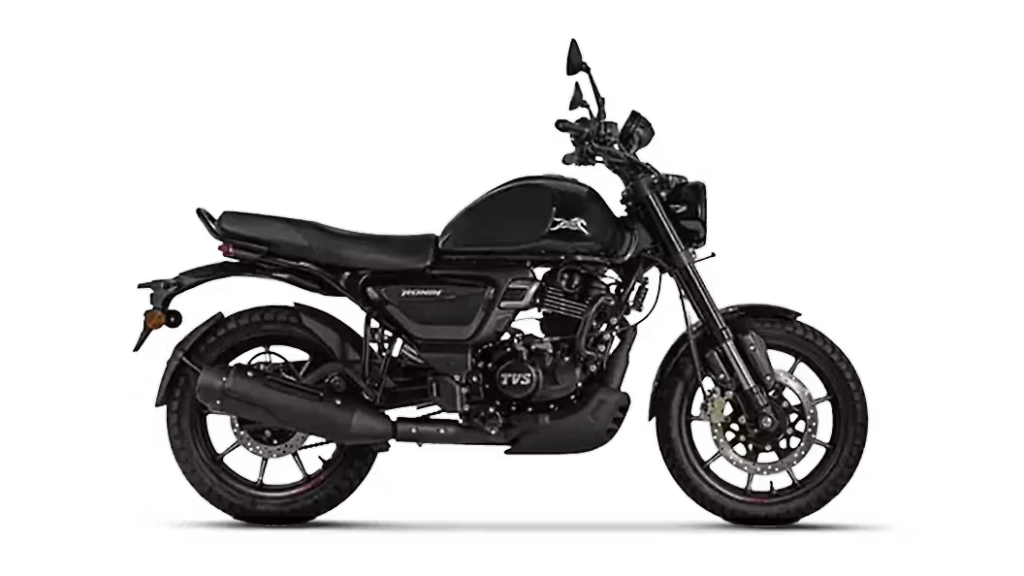
Since its debut, the Ronin has defied easy categorization. Is it a cruiser? Sort of. A scrambler? It has the tires for it. A roadster? Definitely. In this 2026 review, we’re breaking down why this “unscripted” machine has become a staple for Indian urban riders and whether it’s the right choice for your garage.
The Aesthetic: Modern Meets Classic
The TVS Ronin’s design is polarizing, but in a way that demands a second look. At the front, the signature T-shaped LED DRL gives it a futuristic face, while the teardrop fuel tank and single-piece brown ribbed seat (on top variants) scream retro-cool.
Key Design Highlights:
- Gold USD Forks: The 41mm upside-down forks aren’t just for performance; they add a premium, “big-bike” look to the front end.
- Offset Instrument Cluster: The circular digital pod is placed to the left, a quirky touch that clears up the rider’s field of vision.
- Build Quality: TVS has nailed the fit and finish. From the tactile switchgear to the metallic feel of the tank, the Ronin feels significantly more expensive than its price tag suggests.
Engine and Performance: Built for the “Real World”
The Ronin is powered by a 225.9cc, single-cylinder, oil-cooled engine. On paper, its figures—20.4 PS of power and 19.93 Nm of torque—might seem modest compared to some 250cc rivals. However, the magic lies in where that power is delivered.
The City Slicker
This engine is a “square” motor, meaning it’s tuned for low-to-mid-range grunt. In the city, the Ronin is a master. You can potter around in 3rd or 4th gear at low speeds without the engine knocking, thanks to TVS’s GTT (Glide Through Traffic) technology. It allows the bike to crawl forward in traffic just by releasing the clutch—no throttle required.
The Highway Reality
While it shines in the city, the Ronin isn’t a highway specialist. It cruises comfortably at 80–90 km/h. Once you push past 100 km/h, you’ll start to feel some vibrations through the footpegs, and the engine begins to feel “busy.” It’s perfect for weekend jaunts, but if you’re looking to cross continents at high speeds, you might find it a bit breathless.
Tech and Features: The Smartest Retro on the Block
TVS is known for loading their bikes with tech, and the Ronin is no exception. It’s arguably the most feature-rich bike in its segment.
| Feature | Description |
| SmartXonnect | Bluetooth connectivity offering turn-by-turn navigation, call/SMS alerts, and voice assist. |
| Riding Modes | Two ABS modes: Urban (higher intervention for safety) and Rain (max intervention for wet roads). |
| Slipper Clutch | Makes downshifts smoother and prevents rear-wheel hop during aggressive braking. |
| Adjustable Levers | The top-end variants come with 3-step adjustable brake and clutch levers, a rarity at this price point. |
Ride and Handling: Comfort is King
If you are tired of the aggressive, forward-leaning posture of sportbikes, the Ronin will feel like a lounge chair. The footpegs are centrally mounted, and the handlebar is wide and pulled back.
- Suspension: The USD forks and rear monoshock are tuned for comfort. They soak up potholes and speed breakers with ease, though they can feel a bit soft if you try to take corners aggressively.
- Weight: At around 160 kg, the bike is surprisingly light and easy to flick through traffic. It doesn’t feel top-heavy, making it very approachable for shorter riders or beginners.
- Braking: Equipped with a 300mm front disc and a 240mm rear disc, the braking is progressive. The Dual-Channel ABS (on top variants) provides a massive safety net during panic stops.
The Ownership Experience: Real-World Numbers
- Mileage: You can realistically expect 35–40 km/l in city conditions, and slightly more on the highway if you keep a steady hand.
- Service: TVS has a massive service network. Maintenance costs are generally lower than those of “premium” brands like KTM or Husqvarna.
- Pillion Comfort: This is one area where the Ronin struggles. The rear seat is relatively short. While it’s fine for short city hops, a passenger might feel cramped on longer rides.
What We Love
- Refinement: The engine is incredibly smooth in the city rev-range.
- Ease of Use: Lightweight, low seat height (795mm), and GTT make it effortless to ride.
- Exhaust Note: It has a deep, bassy thrum that sounds much larger than a 225cc motor.
- Value: You get premium hardware (USD forks, LED lights, Bluetooth) at a competitive price.
What Could Be Better
- Rear Design: The rear end looks a bit “chopped” and doesn’t quite match the beefy front.
- Top-End Power: It lacks the “punch” for high-speed highway overtaking.
- Pillion Space: The seat is a bit small for two-up touring.
The Verdict: Who is it for?
The TVS Ronin is for the rider who values character and comfort over raw speed. If your daily life consists of navigating busy city streets, occasional weekend getaways, and a desire to stand out from the sea of commuters, the Ronin is an exceptional choice.
It bridges the gap between a 150cc commuter and a heavy 350cc cruiser perfectly. It’s a “do-it-all” motorcycle for the rider who doesn’t want to follow a script.